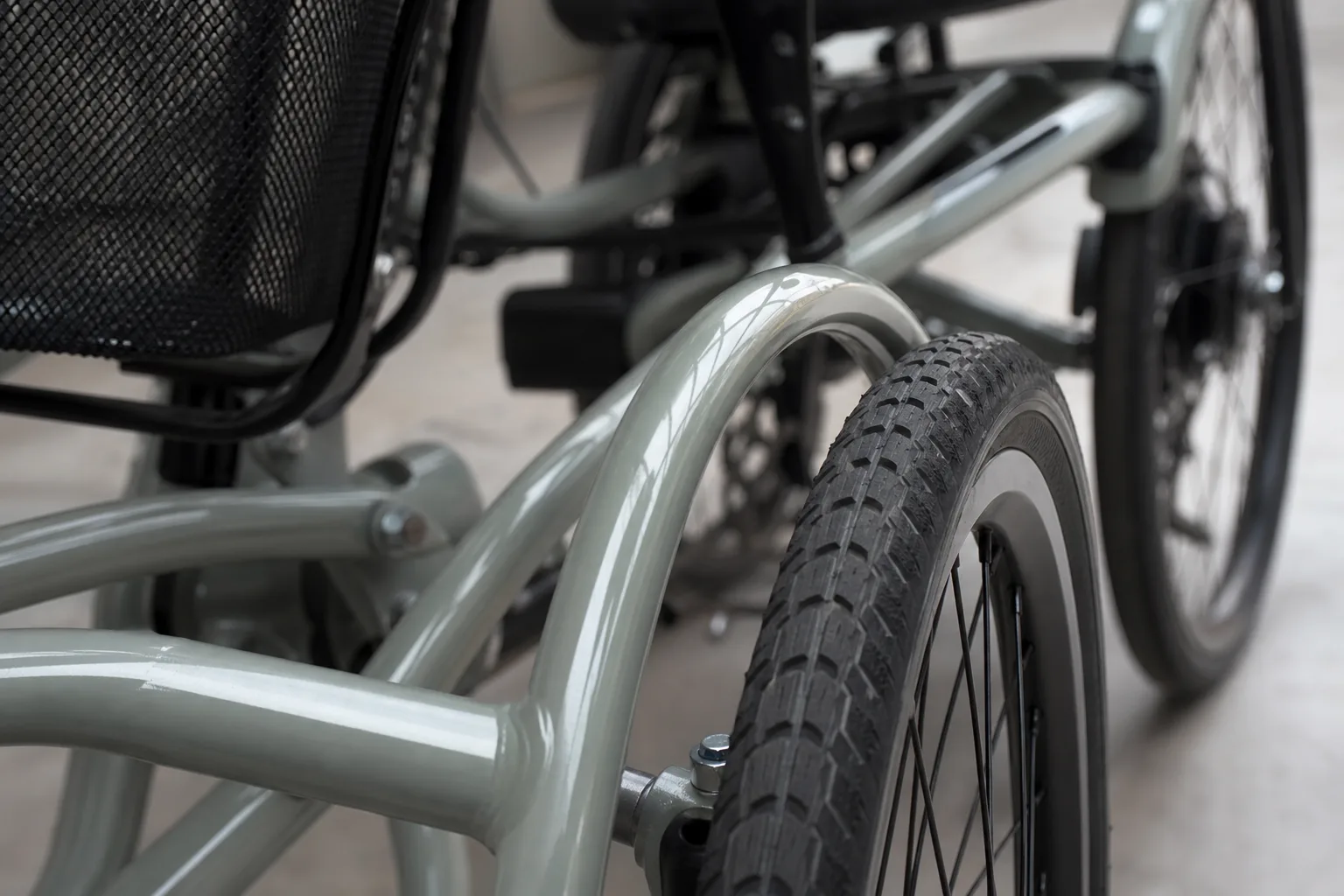
Most American residential streets are built with a crown, a slight peak down the centerline that sheds water toward the gutters on both sides, and the pitch is usually somewhere around two percent. A bicycle absorbs that pitch invisibly, because the rider leans a degree or two without noticing and the contact patch follows. A three-wheeled cycle cannot do that. All three wheels stay flat on a surface that is tilted, the frame stays perpendicular to that tilted surface, and the whole machine, rider included, sits leaning slightly downhill toward the curb. The bars pull that way too, gently and constantly.
What the crown actually does to the steering
The pull is real, not imagined, and it comes from two things at once: gravity acting on a mass that is now off-center relative to the wheel tracks, and the front wheel or wheels wanting to fall toward the low side. On a delta layout, with one wheel in front and two behind, a single steered wheel takes the whole correction and the rider feels it as steady pressure on one grip. On a tadpole, with two wheels in front and one driven wheel behind, the correction is split across a wider steering geometry and often feels lighter, though it never disappears. Either way you hold a small amount of counter-steer for the length of the block. Riders stop noticing it within a week or two.
Track width, seat height, and the number that matters most
Stability against tipping is a relationship between how far apart the wheels sit and how high the rider's mass sits above them, and the second number moves more between models than the first. Track width on adult trikes clusters in a narrow band, because the machine still has to fit a doorway, a bike lane and a garage aisle. Seat height varies enormously. A delta with an upright saddle can put a rider's chest three feet above the pavement, while a tadpole with a bucket seat puts the same rider's hips barely above the axle line. Lower is harder to mount and dismount, and steadier once moving. That is the trade, and it is worth sitting on both.
Standing still is easy, and speed is where attention goes
The counterintuitive part of owning one of these is that the machine is perfectly stable at zero miles per hour, holds itself upright at a red light with two bags of groceries in the rear basket, and asks nothing of the rider at walking pace. Then it asks for more than a bicycle does at twelve. A bicycle leans into a corner and the lean handles the physics for you. A trike does not lean, so the load transfers outward onto the outside wheels and the inside wheel gets light. Take a corner too fast and it lifts. Riders learn to slow before the turn rather than during it, and to shift weight toward the inside, which is a habit that arrives in the first month and then stays.
Gravel shoulders, driveway aprons, and the parking lot test
Where a trike earns its keep is exactly where a two-wheeler is fussy: a gravel shoulder that would wash out a front wheel simply gets crossed, because two other wheels are holding the line. The apron at the foot of a driveway is different, since the wheels meet the lip at slightly different moments and the frame twists a little as it climbs. Rear suspension or a compliant frame makes that a non-event. Before buying, ride the demo across a sloped parking lot, over a curb cut at an angle, and around a tight turn at ten miles per hour, and pay attention to whether the inside wheel stays planted. The Consumer Product Safety Commission oversees bicycle equipment standards in the United States, and reputable builders design to that framework, so brakes and reflectors are rarely the variable. Geometry is.
The checks that separate a good purchase from a returned one are small and physical: sit on the seat and note how high your shoulders feel, measure the outside track against the narrowest gate you own, ride a crowned street and see whether the pull tires your wrist or fades into background. Almost every rider adapts to the camber. Very few adapt to a seat that was always an inch too high for them.